Deceased Organ Donation
What is Deceased Organ Donation?
Deceased organ donation refers to the process of donating organs after death, typically from brain-dead individuals who had pledged to donate or whose families consent to the donation. A single deceased donor can save up to eight lives by donating vital organs such as the heart, liver, kidneys, lungs, pancreas, and intestines.
Global Perspective
Across the world, countries rely heavily on deceased organ donation to meet the growing demand for transplants. In nations with advanced transplant programs—such as Spain, the United States, and the UK—deceased donors account for the majority of life-saving transplants each year. This model ensures fairer access, faster matching, and fewer ethical complications compared to commercial or unregulated donation.
Islamic Viewpoint
Leading Islamic scholars and juristic bodies—including Al-Azhar University and the Islamic Fiqh Council—have permitted organ donation after death as an act of charity (sadaqah jariyah), provided it is done with consent and without commercialization. In Pakistan, the Council of Islamic Ideology has also endorsed deceased organ donation, reinforcing its acceptability within Islamic values.
Status in Pakistan
Despite legal frameworks such as the Transplantation of Human Organs and Tissues Act, Pakistan remains heavily dependent on living donors—mostly family members—due to low public awareness and limited infrastructure for deceased donation. This has created a wide gap between the number of patients awaiting organs and available donors.
KP-MTRA’s Mission and Milestones
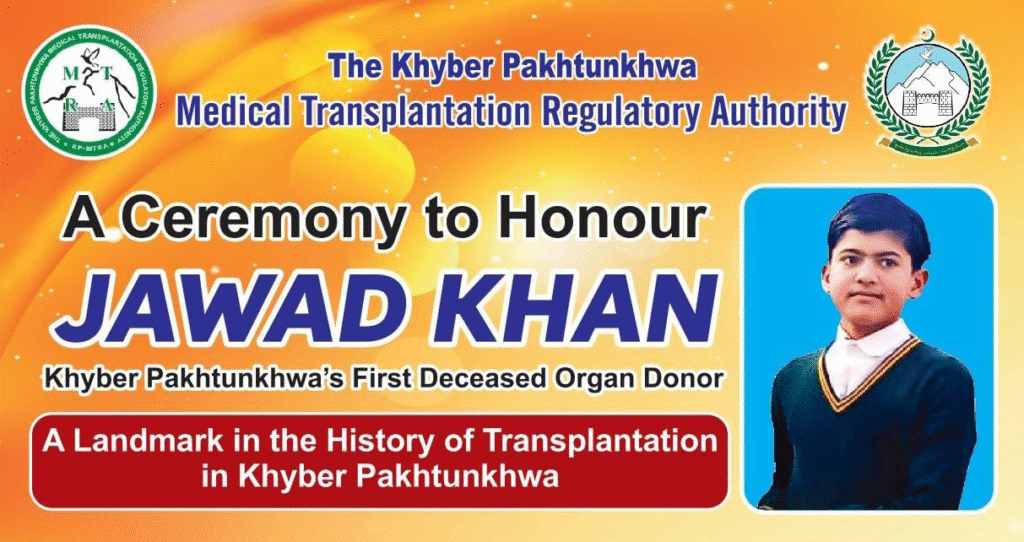
KP-MTRA is leading the way to change this narrative in Khyber Pakhtunkhwa. In a historic moment, Jawad Khan became the province’s first deceased organ donor, giving the gift of life to multiple patients. His legacy marks the beginning of a new chapter in ethical and compassionate healthcare.
To support and scale this life-saving model, KP-MTRA has launched an online donor registration system, enabling citizens to pledge their organs in the event of death. Public response has been promising, with many individuals registering and spreading awareness within their communities.
Why It Matters
With thousands of patients in desperate need of transplants and limited availability from living donors, deceased organ donation presents the most sustainable and equitable solution. By bridging the gap between organ demand and supply, we can save lives, reduce suffering, and build a compassionate healthcare system for future generations.